Texas Great Plains State Park
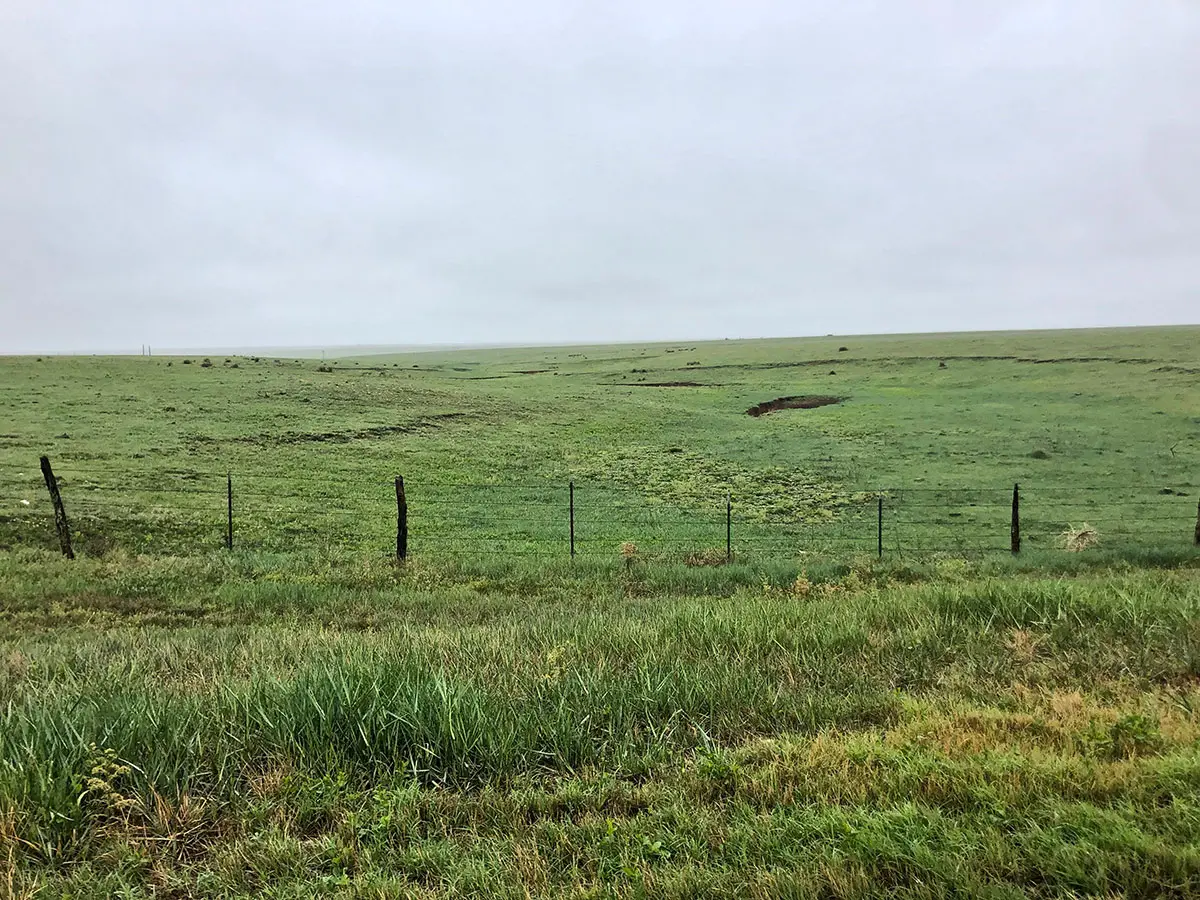
It’s time to rewild the legendary Texas Panhandle Plains. Not since the late 1800s, the Red River War against Indian people and the slaughter of the Texas bison, wolves, prairie dogs and others have Americans gone out to the Llano Estacado and Northern Panhandle shortgrass plains as a place of wildness. After 20+ years of building a new culture of caring for America’s lost Great Plains, doing so through our innovative Ecological Health education and intervention model which deeply helps heal youth and wild ecosystems who are facing stress, Great Plains Restoration Council has convened an A-Team of executives from State agencies, conservation non-profits, foundations, banking and the Kiowa Tribe to “Establish a historic, landscape-scale shortgrass prairie preserve (up to 100,000 acres or more over time) in the Texas Panhandle for wild Texas Bison, pronghorn, black-tailed prairie dogs, black-footed ferrets, elk, grassland nesting birds, swift foxes and more that also offers multicultural human engagement, including ancestral connections for Indigenous people.”
This will be a new kind of wild Park for America, interweaving recreation and wellness, mental health and personal recovery into conservation while addressing the alarming decline in native biological diversity and the vanishing sense of place that is Texas and the West.
Sorrow and loss from the past can feel bottomless, but history is not over. Through the audacity of hard work and loving more, we are bringing people together of all colors, cultures, and communities to create the nation’s first-ever Texas Great Plains State Park in the Texas Panhandle. This landscape-scale grassland area out in America’s “Flyover Country” will breathe life back into the Texas High Plains, and provide an extraordinary public refuge of sun, wind, grass, and blue sky for wildlife and people. Few Americans consider going out to hike the Plains.
Excerpts from Texas’ Wildlife Action Plan (WAP)
“I was born upon the prairie, where the wind blew free and there was nothing to break the light of the sun. I was born where there were not enclosures and everything drew a free breath. I want to die there and not within walls.”
Chief Ten Bears, Yamparika Comanche
“I was there before they ploughed the plains. Oh, the sun was hot, and the wind was hard, and you got cold in the winter. I was just crazy about all of it … The beauty of that wild world”.
Georgia O’Keefe
(GPRC note: And she wrote this after all the buffalo had been killed, and Indian people either also killed or moved out.)
Listen to lonely meadowlark singing on the emptied Llano Estacado plain that should be filled with Southern bison, elk, antelope, prairie dogs, swift foxes, burrowing owls and a lot more.
(Please listen with headphones.)
While this project and video is focused on the Northern Plains, it is a good summary of the situation swift foxes face across the Great Plains, and swift foxes are one of our Texas Wildlife Action Plan Species of Special Concern.
“How They Killed The Buffalo” (August 1956, Volume 7, Issue 5) n:50822 — detailed account of 1870’s buffalo hunters coming down from southwestern Kansas to the Texas Panhandle; Adobe Walls / /Canadian River country (where the Turkey Track ranch is).
Harper’s Weekly originals we possess from 1877 and 1874 talking about the buffalo hunters from southwestern Kansas. They had a technique called “still hunting” where they would shoot the leader of the herd with a long-range Sharps .50 rifle, and then in the ensuing confusion be able to kill the entire herd.
Buffalo wolves (now-extinct Canis Lupus Nubilus) feeding on slaughtered buffalo left to rot on the Plains. Note the white coat color variation common to buffalo wolves in the Southern Plains.
Last (known) buffalo wolf shot in Texas in Palo Duro Canyon, white color coat variation (somewhat faded by time). Panhandle Plains Historical Museum, Canyon, TX.
Black-tailed prairie dog, 1892.
“Herd of Buffalo Fleeing from Prairie Fire”, Meyer Strauss, 1888, Amon Carter Museum, Fort Worth.
Here’s an article from the Texas State Library and Archives Commission:
“Indian expulsion:Upon taking office, Lamar instituted an immediate change in Indian policy. Like most white Texans, Lamar did not accept the idea of coexistence with Indian tribes within Texas. Instead of Sam Houston’s policy of negotiation and conciliation, Lamar proposed to drive the Indians out of the areas of white settlement and to aggressively go after the Comanches.”
Mirabeau B. Lamar
Vocabulary of the Kiowa Language (PDF) – from Smithsonian Institution Bureau of American Ethnology
Elk are still listed as an “exotic animal” in TX, even though elk once ranged across the Great Plains including most of Texas.
This is mainly because the Trans-Pecos population stems from reintroductions in the 1920s+ of apparently a different subspecies.
**But there is a second elk population in Texas, a growing population of wild native prairie elk spilling back onto the plains in the northern TX Panhandle north of Amarillo (check out Ben Masters’ camera trap footage https://www.instagram.com/reel/CxffQtXLpje/# ),from animals returning to the low-human-population plains of southeastern Colorado and NE New Mexico and now Texas.
The legendary Canadian River country in the northern Texas Panhandle is where several entities (led by Great Plains Restoration Council) are working to create the large rewilding preserve.
So at some point elk should be reclassified as native wildlife in TX.
EXCERPT: When settlers first arrived in Texas, prairie ecosystems covered much of the state, creating a wide range of suitable habitat for nomadic grazers like elk.
The earliest written historical sighting of elk in Texas occurred in 1601. The first Spanish governor of New Mexico, Don Juan de Oñate, embarked on an exploration of lands to the northeast of Santa Fe. Starting from San Juan, New Mexico, he followed the Canadian River from northeastern New Mexico to just before it makes a turn to the north on today’s Texas-Oklahoma border. Between those two points along the Canadian River in the Texas Panhandle, he described seeing a new kind of deer
200 years later, there still is no Great Plains National Park, so now we will do it in Texas on the state level as the first-ever Great Plains State Park.
The following is the passage in which Catlin made his startling suggestion:
“This strip of country, which extends from the province of Mexico to Lake Winnipeg on the North, is almost one entire plain of grass, which is, and ever must be, useless to cultivating man. It is here, and here chiefly, that the buffaloes dwell; and with, and hovering about them, live and flourish the tribes of Indians, whom God made for the enjoyment of that fair land and its luxuries.
“It is a melancholy contemplation for one who has traveled as I have through these realms, and seen this noble animal in all its pride and glory, to contemplate it so rapidly wasting from the world, drawing the irresistible conclusion too, which one must do, that its species is soon to be extinguished, and with it the peace and happiness (if not the actual existence) of the tribes of Indians who are joint tenants with them, in the occupancy of these vast and idle plains.
“And what a splendid contemplation too, when one (who has traveled these realms, and can duly appreciate them) imagines them as they might in future be seen (by some great protecting policy of government)preserved in their pristine beauty and wildness, in a magnificent park, where the world could see for ages to come, the native Indian in his classic attire, galloping his wild horse, with sinewy bow, and shield and lance, amid the fleeting herds of elks and buffaloes. What a beautiful and thrilling specimen for America to preserve and hold up to the view of her refined citizens and the world, in future ages! A Nations Park, containing man and beast, in all the wild and freshness of their nature’s beauty!
“I would ask no other monument to my memory, nor any other enrollment of my name amongst the famous dead, than the reputation of having been the founder of such an institution.”